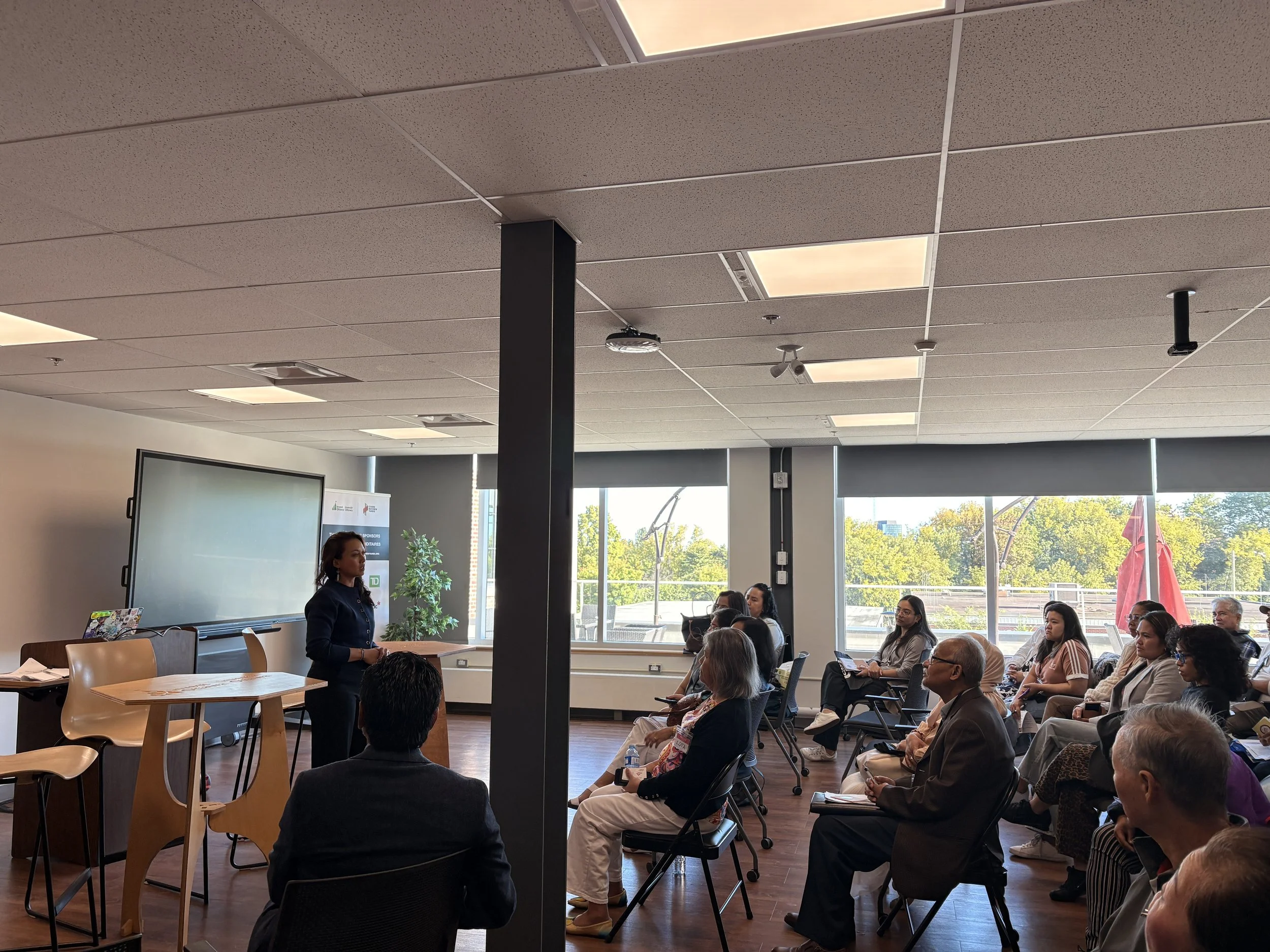
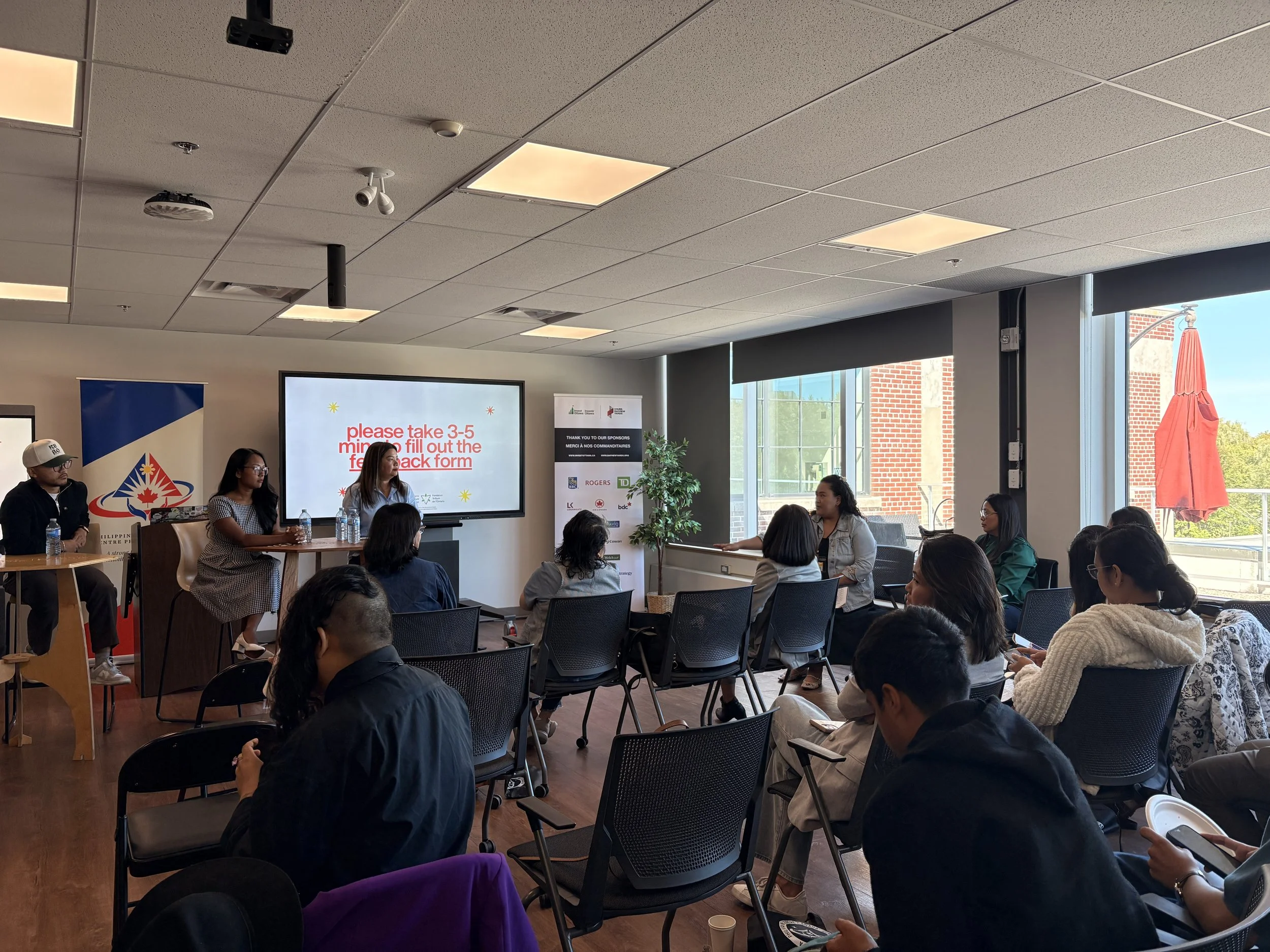
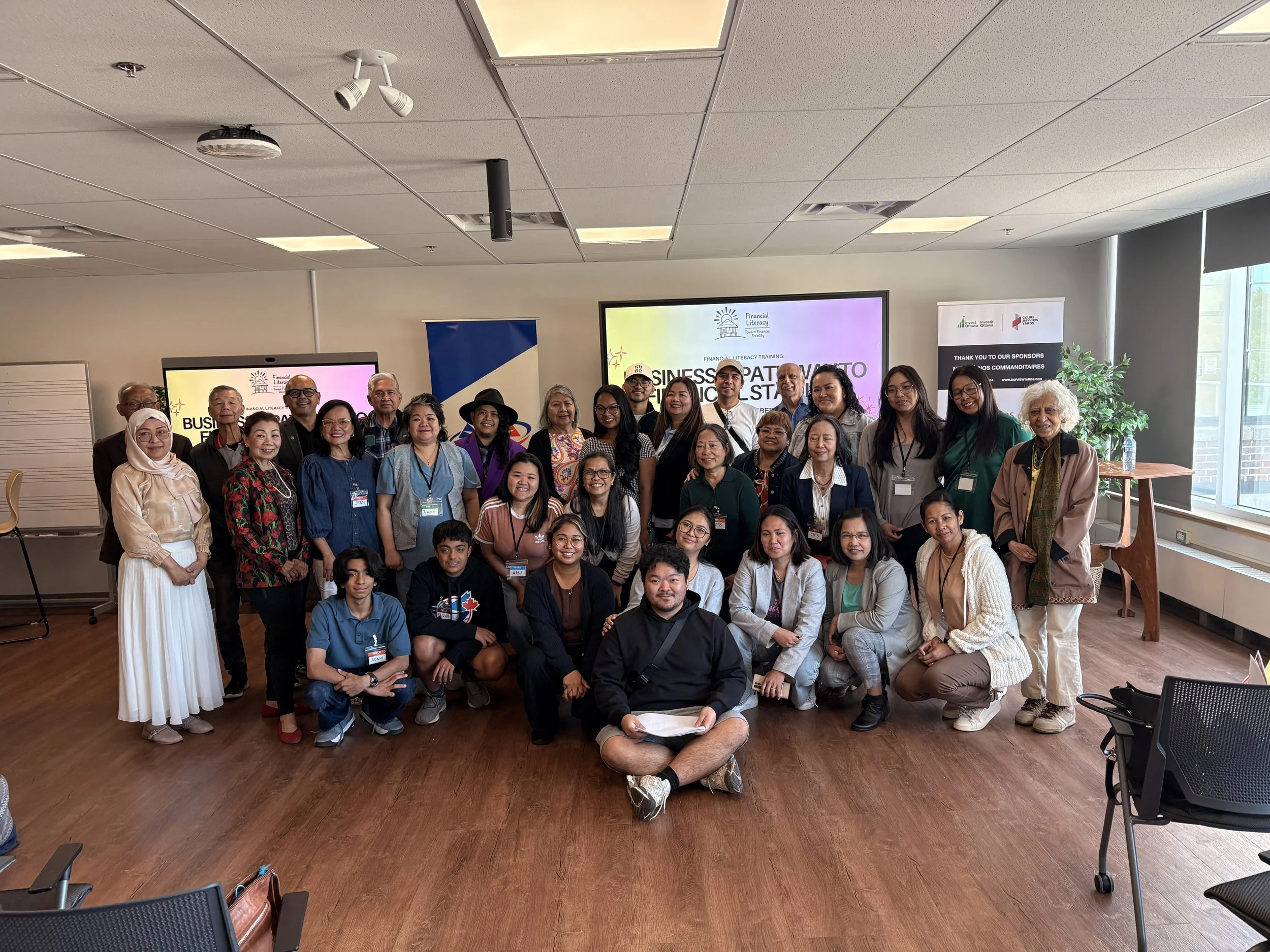
Key takeaways from the panelists' experiences and brief references to participants' questions
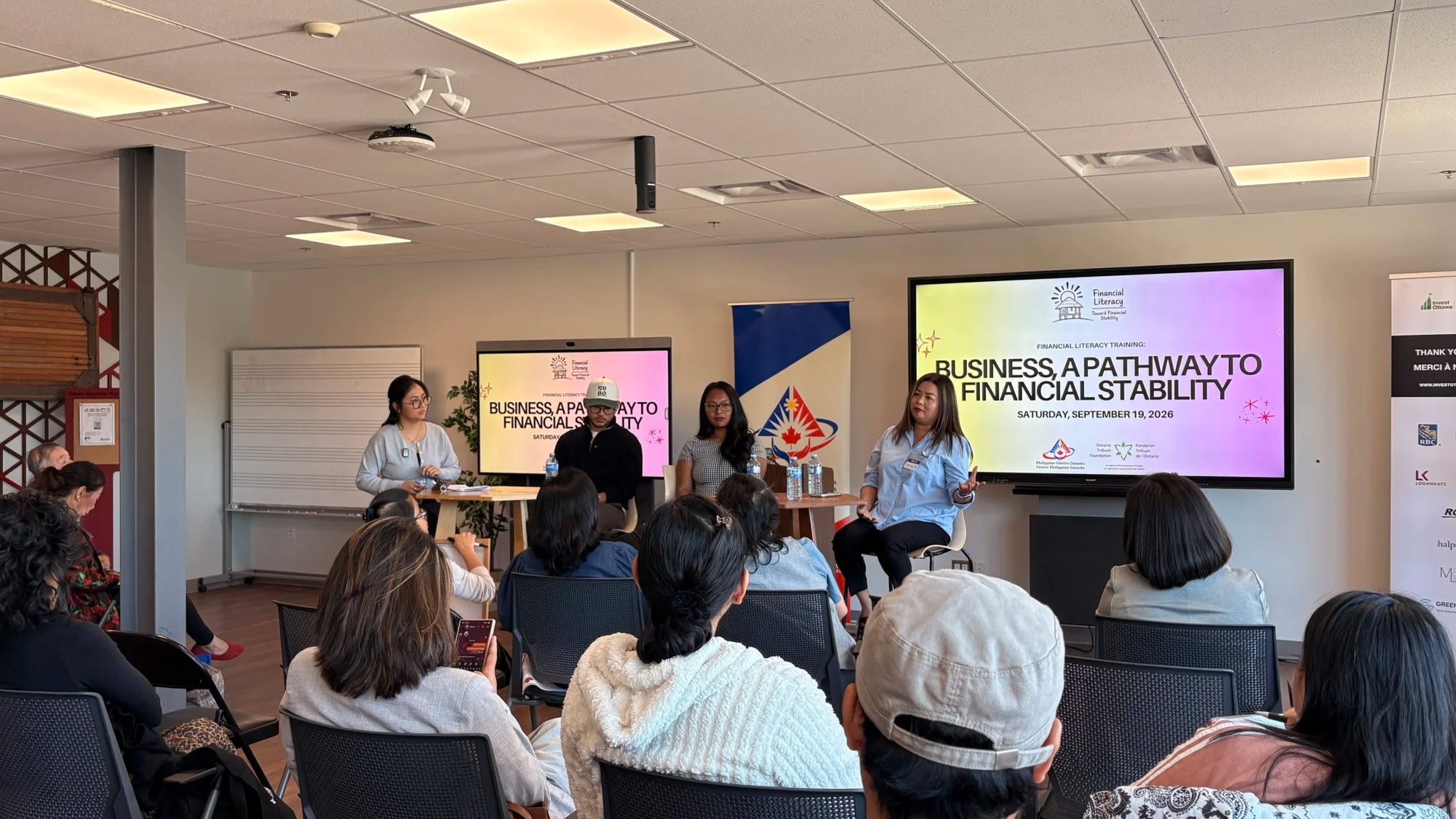
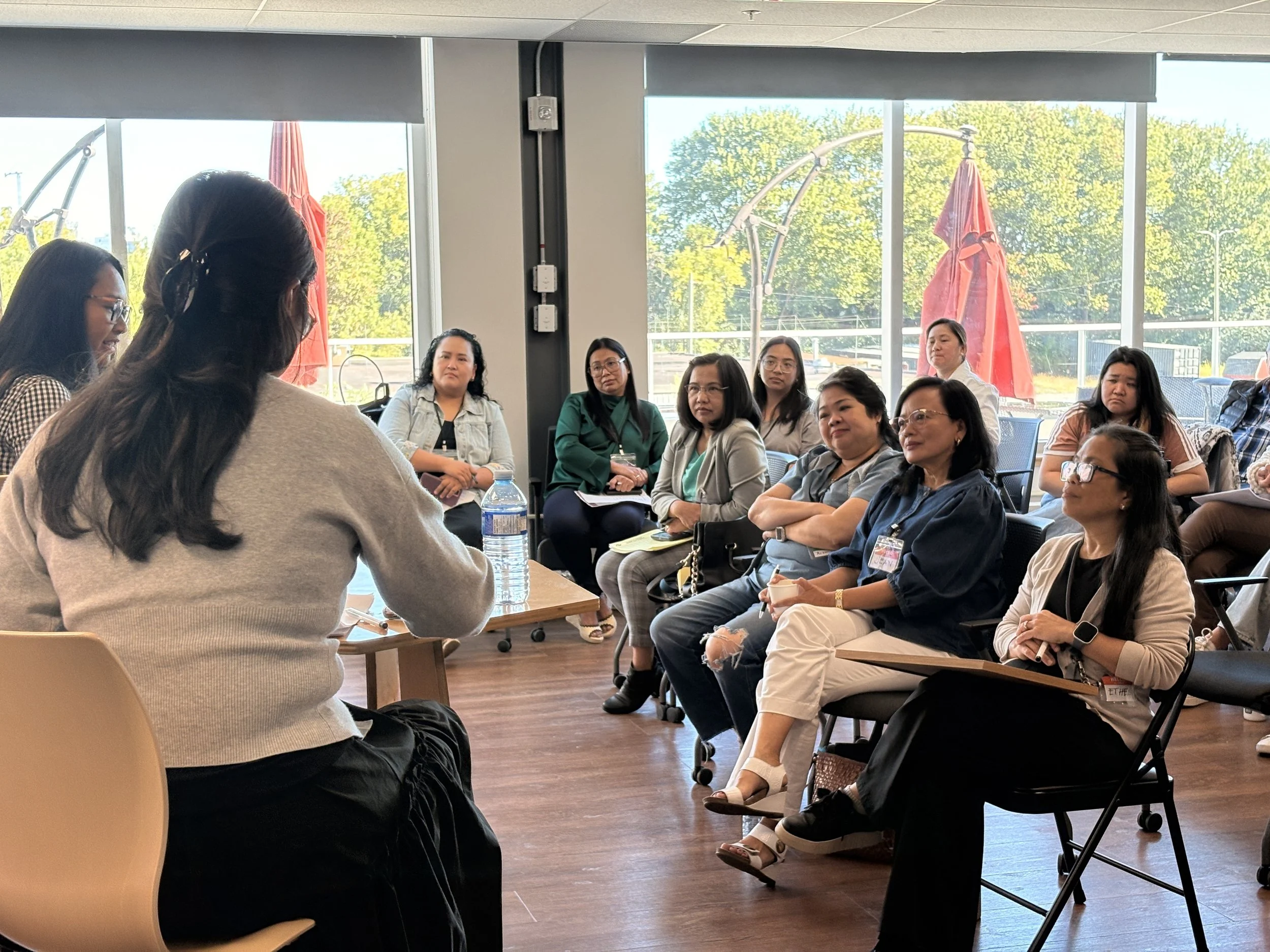
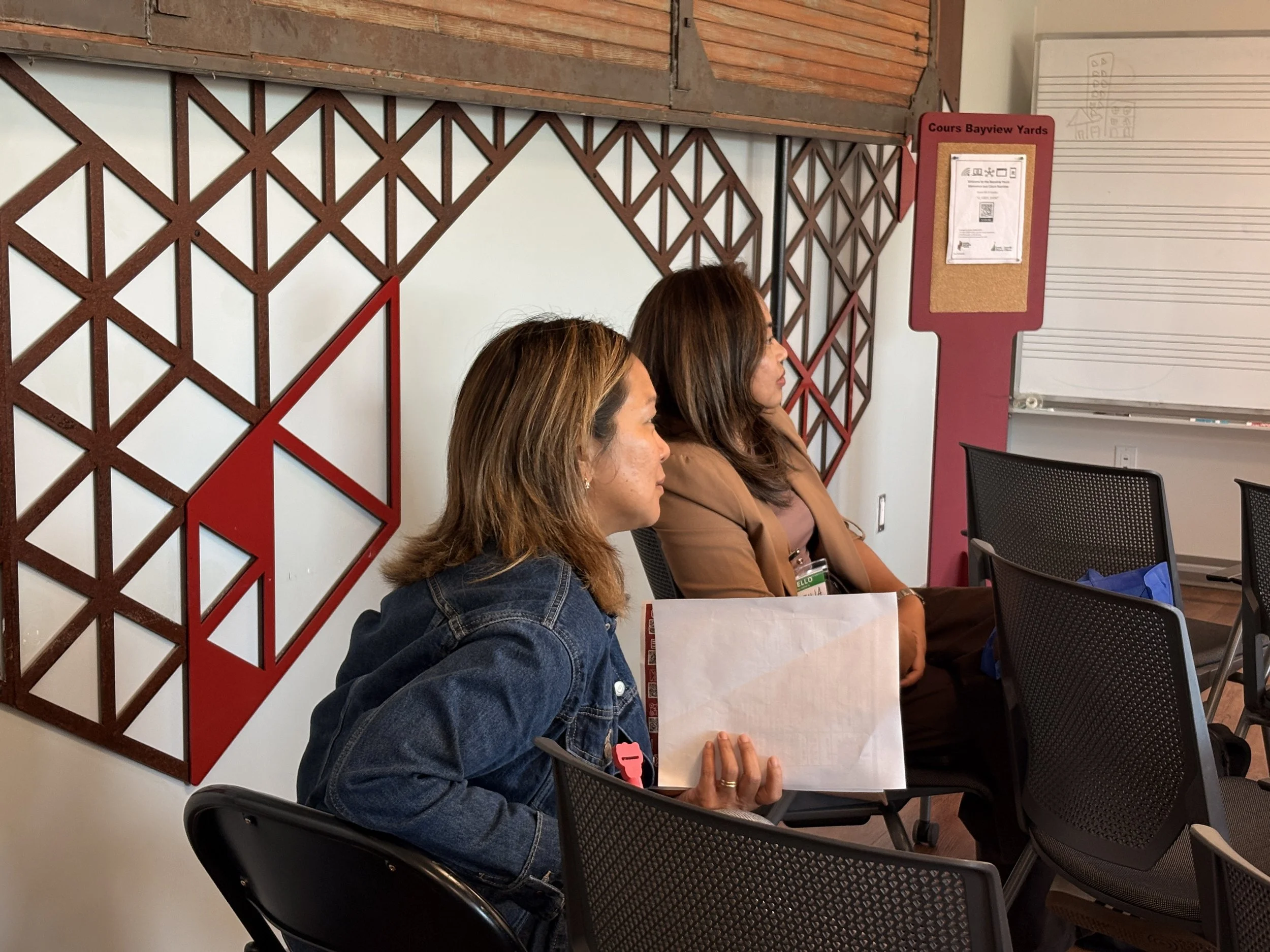
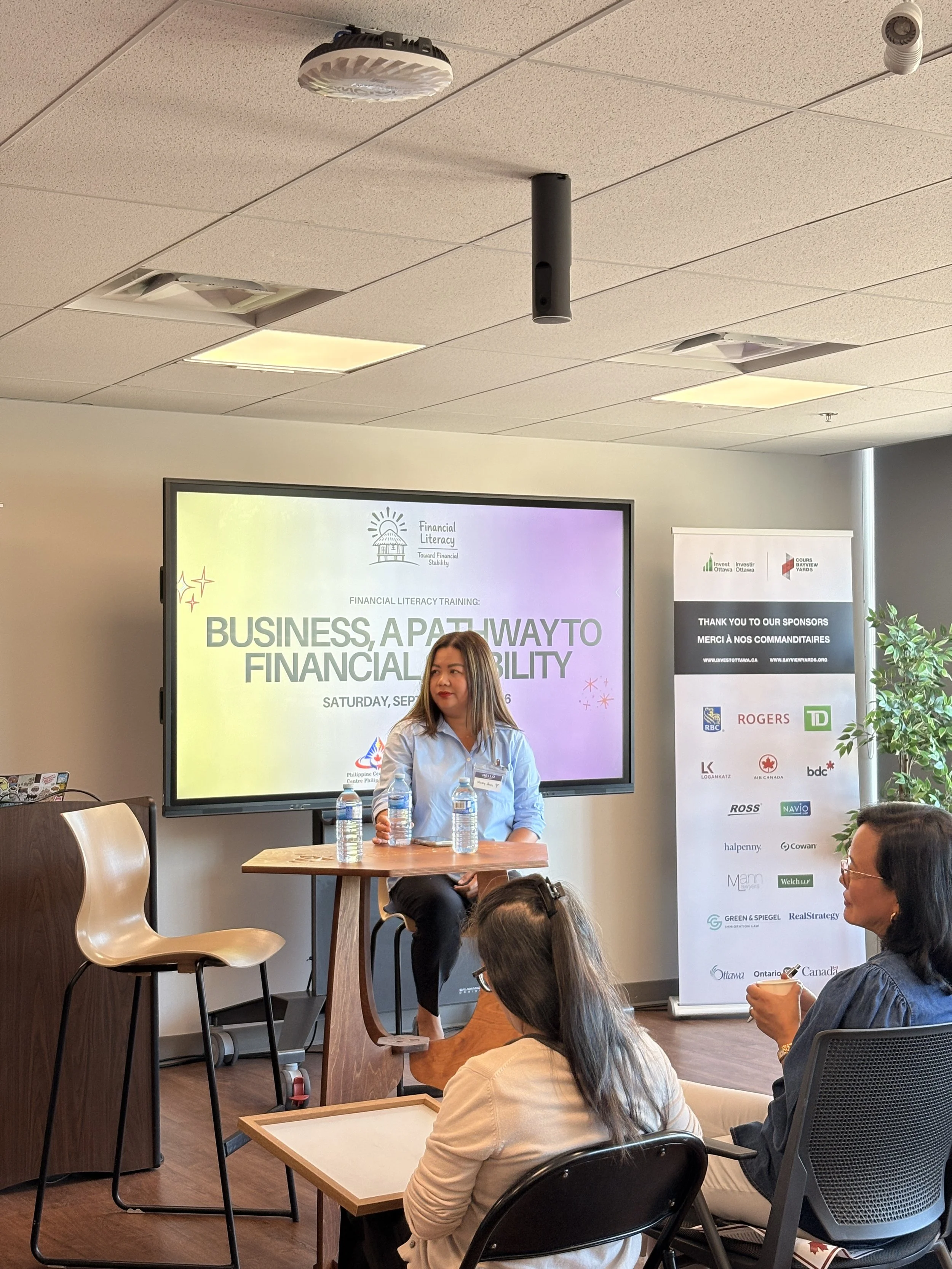
On September 19, the Philippine Centre Canada (PCC) brought together Filipino Canadian entrepreneurs, aspiring business owners, and community members for Financial Literacy: Business, A Pathway to Financial Stability at Cours Bayview, Bayview Yards in Ottawa.
Building Financial Stability Through Business: Key Takeaways from Our Panel
What does it really take to build a business while working toward greater financial stability?
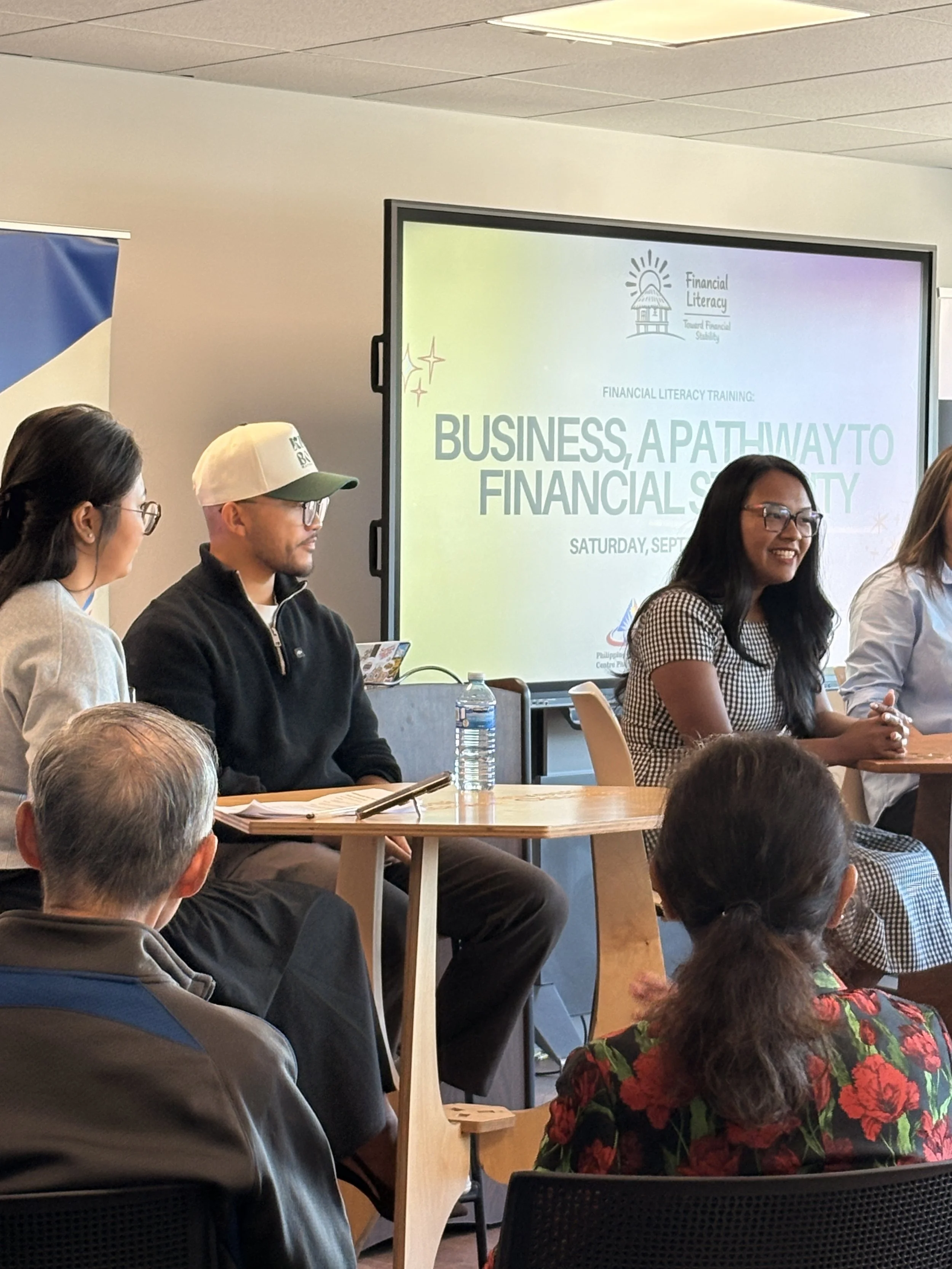
At our September 19 Financial Literacy Toward Financial Stability workshop, PCC brought together entrepreneurs from different industries for a candid conversation about their experiences building and growing their businesses. The panel gave participants an opportunity to hear not only about the successes behind entrepreneurship, but also about the challenges, decisions, and lessons that come with running a business.
The panel featured Joshua Lagarde of KUBO Matcha, Carmela Moreno of Grande Events, and Mary Ann Fabella of Dental Hygiene Corporation, who each brought a different perspective on entrepreneurship and financial stability.
Starting with an idea and turning it into something sustainable
One of the key themes throughout the conversation was that starting a business is only the beginning. Building something sustainable requires continuous learning, adaptability, and a willingness to make decisions as circumstances change.
The panelists shared perspectives from their own entrepreneurial journeys, highlighting that businesses can develop in different ways depending on the industry, the needs of their customers, and the opportunities available to them.
Their experiences also demonstrated that there is no single path to entrepreneurship. Each business has its own challenges and requires its own approach to growth and sustainability.
Understanding the financial side of running a business
Financial stability was at the centre of the discussion. Beyond generating revenue, business owners need to understand their expenses, manage cash flow, make informed financial decisions, and think carefully about how they reinvest in their businesses.
The discussion connected directly with the broader goals of PCC's Financial Literacy Toward Financial Stability project. Financial literacy is not only about managing personal finances. For entrepreneurs, having a strong understanding of the financial side of a business can also help them make more informed decisions about its future.
Learning through challenges
The panelists' experiences also showed that challenges are a natural part of running a business. Participants heard about the importance of learning from difficult experiences, adjusting when something does not work as expected, and continuing to look for opportunities to improve.
Rather than presenting entrepreneurship as a straightforward journey, the conversation offered a more realistic look at the decisions and uncertainties that business owners navigate along the way.
Participants brought their own questions
The conversation also gave participants an opportunity to ask questions and engage directly with the panelists.
Questions from the audience reflected a range of interests and concerns around entrepreneurship, including how people can approach business opportunities, navigate challenges at different stages of their businesses, and think about their next steps as their businesses develop.
These exchanges helped make the panel more than a presentation. Participants were able to connect the panelists' experiences with their own questions, ideas, and entrepreneurial goals.
Different experiences, shared lessons
Although each panelist came from a different business background, several common lessons emerged from the discussion: entrepreneurship requires adaptability, financial awareness, persistence, and a willingness to keep learning.
For PCC, conversations like this are an important part of creating accessible opportunities for community members to learn from one another. By bringing entrepreneurs and community members together, the Financial Literacy Toward Financial Stability project aims to make financial education practical, relevant, and connected to people's everyday experiences.
We are grateful to Joshua, Carmela, and Mary Ann for sharing their experiences and to everyone who participated in the conversation and contributed their questions.
The discussion was a reminder that financial stability can look different for everyone, and that learning from the experiences of others can be an important part of finding the path that works for you.